Table Of Content
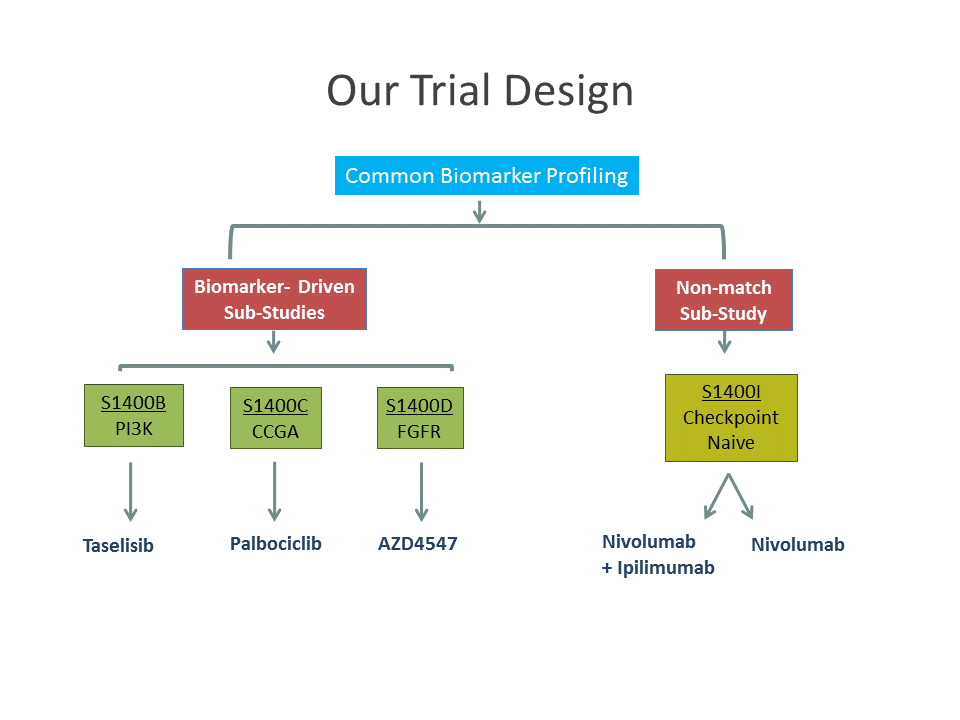
The I-SPY COVID adaptive platform trial is a trial for patients with severe COVID-19 in which up to four agents are evaluated in parallel on a backbone of standard of care. This week we discuss two key design features of randomized clinical trials used to protect against bias, randomization and masking. Clinical trials typically report analyses other than the pre-specified primary objective or endpoint. Such analyses are often labeled secondary, exploratory, subgroup, or translational analyses.
Tackling biases in clinical trials to ensure diverse representation and effective outcomes - Nature.com
Tackling biases in clinical trials to ensure diverse representation and effective outcomes.
Posted: Thu, 15 Feb 2024 08:00:00 GMT [source]
Observational studies
When trial investigators are blinded, they may be less likely to transfer inclinations to study participants, less likely to differentially apply adjunctive therapy, adjust a dose, withdraw study participants, or encourage participants to continue participation. When assessors are blinded, they may be less likely to have biases affect their outcome assessments. In a placebo controlled trial for an intervention for multiple sclerosis, an evaluation was performed by both blinded and unblinded neurologists. A benefit of the intervention was suggested when using the assessments from neurologists that were not blinded, but not when using the assessments from the blinded neurologists.
9 Preventing missing data and encouraging adherence to protocol
Therefore, the investigator needs to effectively assess the likely trial design risk/benefit ratio with a view to maximizing the chance of a meaningful outcome, whether this outcome rejects or fails to reject the null hypothesis. This analysis is especially important in a complex and heterogeneous disorder such as PLP, which has had many negative trials. The outcomes that you and your team establish at the beginning of the design process will influence other design decisions such as trial type, randomization, masking, sample size, and more. In this module, you’ll learn about various approaches to bias control as well as simple, restricted, and adaptive approaches to trial participant randomization. Finally, you’ll learn to protect the validity of your results with masking procedures that conceal treatments and outcomes as necessary from the study team, participants, and outcomes assessors.
Clinical trial design during and beyond the pandemic: the I-SPY COVID trial
Parallel group design can be applied to many diseases and allows running experiments simultaneously in a number of groups, and groups can be in separate locations. The randomized patients in parallel groups should not inadvertently contaminate the other group by unplanned co-interventions or cross-overs. Missing data is one of the biggest threats to the integrity of a clinical trial. Thus it is important when designing a trial to consider methods that can prevent missing data. A placebo can be defined as an inert pill, injection, or other sham intervention that masks as an active intervention in an effort to maintain blinding of treatment assignment. It is termed the “sugar pill” and does not contain an active ingredient for treating the underlying disease or syndrome but is used in clinical trials as a control to account for the natural history of disease and for psychological effects.
Design and Conduct of Clinical Trials

Interpretation of clinical trial results can be challenging, as weaknesses in trial design, data collection, analysis or reporting, can compromise the usefulness of results. A good working knowledge of clinical trial design is essential to expertly interpret and determine the validity and generalizability of the results. This manuscript will give a brief overview of clinical trial design including the strengths and limitations of various approaches. Similarly it is important to consider adherence to protocol (e.g., treatment adherence) in order address the biological aspect of treatment comparisons. Envision a trial comparing two treatments in which the trial participants in both groups do not adhere to the assigned intervention. Then when evaluating the trial endpoints, the two interventions will appear to have similar effects regardless of any differences in the biological effects of the two interventions.
Trial Stages and Designs
Conversely, if the study is on, for example, a very rare genetic disorder or a common but minor cosmetic issue, then the benefits of the trial may not justify the costs (especially for trials funded by taxpayers). Excellent beginner course on design and interpretation of clinical trials, complements a lot of what I reviewed on my classes and I would like to take a more advanced course on the topic. The instructors have broken down the concepts in a very effective manner and have designed very thoughtful discussion prompts. In a placebo-controlled trial, a placebo must be created to look, smell, and taste just like the intervention. For example a concern for a trial evaluating the effects of minocycline on cognitive function may be that minocycline can cause a change in skin pigmentation, thus unblinding the intervention. For example, an injection site reaction of swelling or itching may indicate an active intervention rather than a sham injection.
This can be in the form of recall bias when subject is required to remember certain events from the past. Typically, subjects with the disease tend to remember certain events compared to subjects without the disease. Observer bias is a systematic error when the study investigator is influenced by the certain characteristics of the group, that is, an investigator may pay closer attention to the group receiving the treatment versus the group not receiving the treatment. One of the ways to decrease observer bias is to use blinding (discussed in section “Blinding”). In simple randomization, the subjects are randomly allocated to experiment/intervention groups based on a constant probability. That is, if there are two groups A and B, the subject has a 0.5 probability of being allocated to either group.
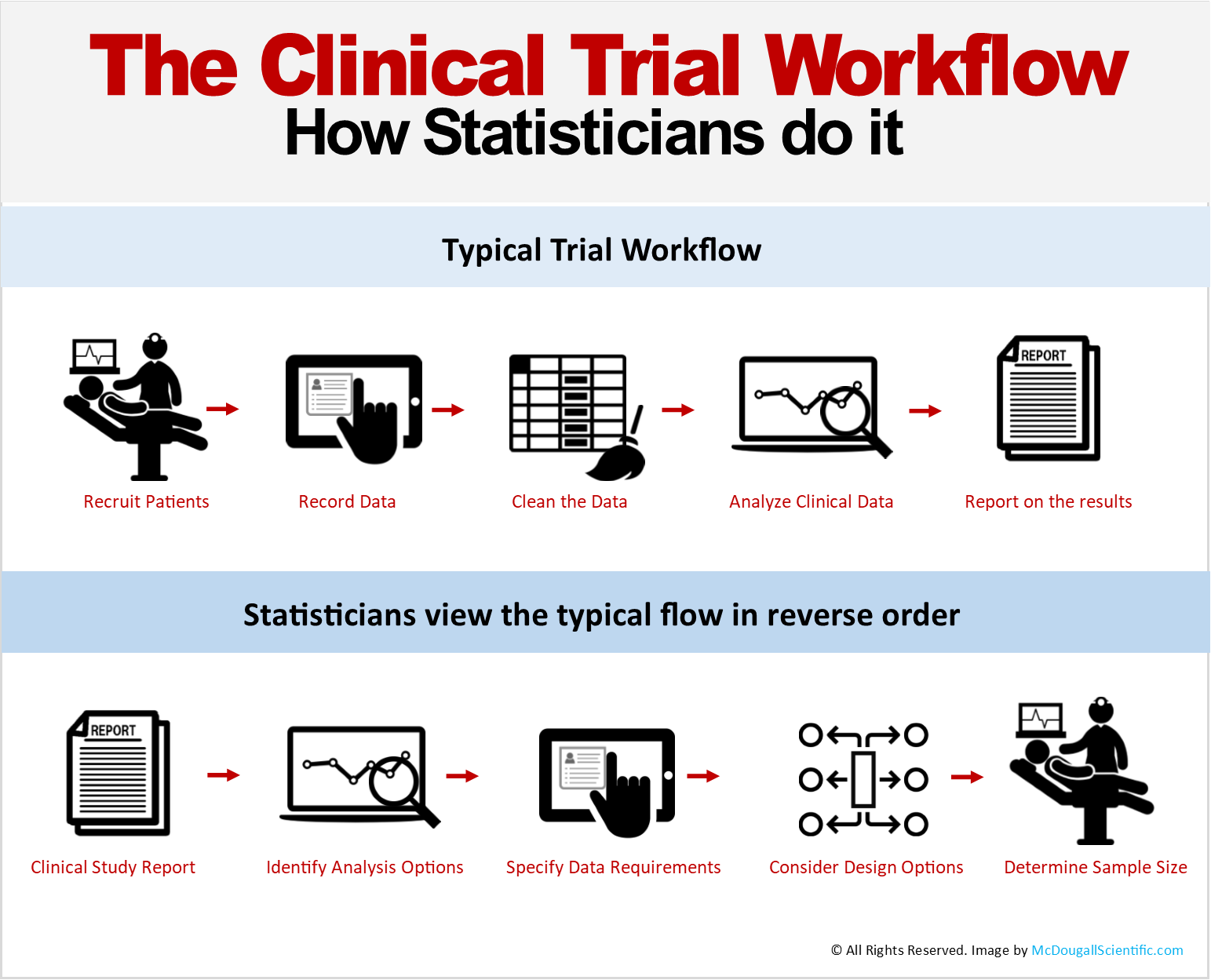
In “play the winner” design, more study subjects are randomized to the effective intervention. In “drop the loser” strategy, study subjects are removed from the ineffective intervention arm. The advantage is enhanced exposure of subjects to an effective intervention and increased chances of recruitment and this can also result in unequal group sizes, which can adversely affect statistical power. The adaptation can be based on the following methods, which can be combined in select trial situations [Table 3]. The design process of a clinical trial is iterative in nature with some of the steps being inherently connected to others, but it can be helpful to divide the process into two phases – conceptual planning and implementation (Figure 1).
A first gene therapy for spinal muscular atrophy to which Généthon contributed has obtained a product license. With more than 200 scientists and professional staff, Genethon is pursuing its aim to develop innovative therapies which change the lives of patients suffering from rare genetic diseases. Thirteen products stemming from by Genethon’s R&D or from collaborations are in clinical trial for diseases of the liver, blood, immune system, muscles, and eyes. It is important to justify the need for the proposed trial, to identify the population of interest and to determine the disease or biomarker prevalence in this population.
Specifically, this includes identifying the current standard of care and reviewing what is already known about the intervention(s) being studied including its safety profile and whether it has been tested in humans. A successful clinical trial answers its primary research question in a valid way to advance the science. It is important to underscore that failure to reject the null hypothesis (or failure to show positive results, i.e. a negative trial) does not mean trial failure (or that the trial did not advance science). Indeed, failing to reject the null hypothesis also teaches us something important.
Knowledge gaps should not be filled with assumptions – if data is lacking, the hypothesis and research question should be broken down to something simpler that can be supported and answered within a clinical trial. It is important that the investigator clearly understands the stage of development of the drug or device being tested. Phases of development are classic for drug trials, and are described as phases I-IV as we explain below.
Hence, the subjects with disease are likely to remember the presence of risk factors compared to the subjects without disease. In clinical research, our aim is to design a study which would be able to derive a valid and meaningful scientific conclusion using appropriate statistical methods. The conclusions derived from a research study can either improve health care or result in inadvertent harm to patients. Hence, this requires a well‐designed clinical research study that rests on a strong foundation of a detailed methodology and governed by ethical clinical principles. The purpose of this review is to provide the readers an overview of the basic study designs and its applicability in clinical research. The critical component for a successful design is the relationship among the different members of the scientific team.
The readers are reminded of the fact that no trial design is perfect, and no design provides optimum answer to all research questions. In this imperfect milieu, all the above-mentioned contingencies must guide the researchers to study the most optimum design among a clutch of options and they must incorporate biostatistician in initial trial design and post-trial analysis. Thus, case‐control studies can also be hypothesis testing studies and therefore can suggest a causal relationship but cannot prove. It is less expensive and less time‐consuming than cohort studies (described in section “Cohort study”). An example of a case‐control study was performed in Pakistan evaluating the risk factors for neonatal tetanus.
A non‐randomized clinical trial involves an approach to selecting controls without randomization. With this type of study design a pattern is usually adopted, such as, selection of subjects and controls on certain days of the week. Depending on the approach adopted, the selection of subjects becomes predictable and therefore, there is bias with regards to selection of subjects and controls that would question the validity of the results obtained.
It is often desirable for this targeted patient population to be as large as possible to maximize the impact of the intervention. Thus phase III trials tend to have more relaxed entry criteria that are representative (both in demographics and underlying disease status) to the patient population for which the intervention is targeted to treat. Randomization is a well‐established methodology adopted in research to prevent bias due to subject selection, which may impact the result of the intervention/experiment being studied. It is one of the fundamental principles of an experimental study designs and ensures scientific validity.


No comments:
Post a Comment